
What makes a privacy hedge stay dense instead of going patchy?
A hedge stays dense when light reaches the sides, new growth is encouraged, and cuts are made in a way that triggers branching. If the top is allowed to get wider than the base, the lower sections get shaded and slowly lose leaves.
The simplest rule is shape. Keep the hedge slightly narrower at the top and wider at the bottom so sunlight hits the entire face. Density is also about consistency. Small, regular trims produce tighter growth than heavy, occasional cuts.
How often should they schedule hedge trimming in Sydney?
For hedge trimming Sydney properties require, most privacy hedges do best with light trims every 6 to 10 weeks during active growth. Fast-growing varieties may need more frequent shaping, while slower species can stretch longer between visits from a hedge trimming Sydney professional.
Season also plays an important role in hedge trimming Sydney gardens properly. Growth typically accelerates through spring and summer, then slows in the cooler months. A good schedule follows the hedge’s growth pattern rather than a fixed calendar. If it is putting on 5 to 10 cm of new growth, it is usually ready for a tidy trim to keep the face dense and neat.
When is the best time of year to trim for maximum thickness?
They get the best thickening results by trimming during the hedge’s active growth season. Spring is ideal for setting shape and triggering branching, then summer trims keep it compact and private.
Hard trimming in extreme heat can stress some hedges, especially if they are already dry. Late autumn trims should be lighter, since heavy cuts can leave fresh growth exposed to cold snaps. The goal is to trim when the plant can quickly recover and fill in.
What trimming shape helps create a thick “wall” of greenery?
A slight taper is the shape that keeps hedges full from top to bottom. If they cut the sides vertical or flare the top out, the base gets less light and loses density.
For a true privacy wall, the face should be flat and even, with the top kept crisp but not scalped. The top sets the hedge’s height, so once it reaches the desired level, they should maintain it with small trims to stop it stretching and getting leggy.
Should they use shears or a hedge trimmer for the cleanest, densest result?
A hedge trimmer is best for maintaining a consistent surface quickly, which helps keep the hedge compact. Hand shears are useful for detail work and for selective cuts where they want to preserve a softer, natural look.
For density, what matters is cut quality and frequency. Sharp blades prevent tearing, which reduces browning and stress. If a hedge is prone to browned tips, a lighter pass more often usually looks better than an aggressive cut that exposes older wood.
How do they fix a hedge that is thinning at the bottom?
They fix bottom thinning by letting more light in and encouraging new shoots lower down. That usually means reducing the top width and easing the sides back into a tapered form.
In some cases, selective thinning higher up can help light penetrate without changing the overall height. If the hedge is very leggy, staged rejuvenation is safer than one severe cut. They can also support recovery with consistent watering, mulch, and a feeding plan suited to the species.
How much can they cut off without damaging the hedge?
They should avoid removing too much green growth at once, especially in hotter months or during stress. As a general guide, light trims that remove the outer layer are safest and keep density high.
Cutting back into old, leafless wood can be risky for some hedge types, because not all species reshoot reliably from bare stems. If they are unsure, they should identify the species first and use a conservative approach. When major reductions are needed, professional hedge trimming in Sydney can prevent irreversible gaps. Read more about tree protection laws.
What common trimming mistakes reduce privacy over time?
The most common mistake is letting the hedge grow tall and wide, then cutting it back hard. That often exposes bare interior branches and creates thin, see-through sections that take months to recover.
Another issue is uneven cuts. Low spots and waves let sightlines through and force deeper cutting later. Dull blades also cause ragged edges and browning, which makes even a “healthy” hedge look tired. Finally, trimming during heat stress without irrigation support can lead to leaf drop and patchiness. Read more about seasonal tree care tips from experts in tree pruning Sydney.
How should they maintain the hedge after trimming to keep it lush?
After trimming, the hedge needs steady moisture and reduced competition at the roots. A simple mulch layer helps retain water and improves soil conditions, especially in Sydney’s drying periods.
Feeding should match the hedge type and season, but the goal is consistent growth, not soft, excessive shoots. If they want a tight screen, they should prioritise regular light trims, good watering habits, and keeping the hedge face open to light by maintaining that slight taper.
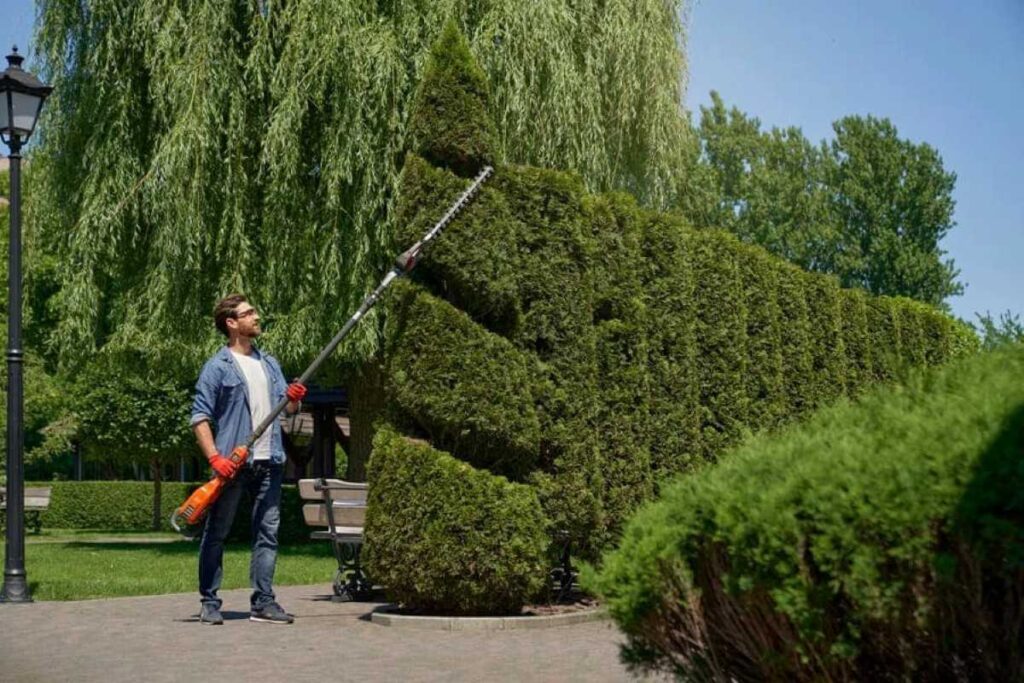
When should they call hedge trimming professionals in Sydney?
They should call professionals when the hedge is tall, access is difficult, or shaping needs to be corrected without damaging future growth. Large hedges are also a safety issue, especially near fences, driveways, and powerlines.
Professionals are also useful when a hedge has become uneven, overgrown, or thin and needs staged recovery. The right hedge trimming Sydney service will focus on structure, plant health, and long-term density, not just making it look neat for a week.
FAQs (Frequently Asked Questions)
What makes a privacy hedge stay dense instead of going patchy?
A privacy hedge stays dense when light reaches its sides, encouraging new growth and branching. Maintaining a shape that is slightly narrower at the top and wider at the bottom ensures sunlight hits the entire hedge face, preventing shading and leaf loss at the base. Consistent, small trims promote tighter growth compared to heavy, occasional cuts.
How often should I schedule hedge trimming in Sydney for best results?
In Sydney, most privacy hedges benefit from light trims every 6 to 10 weeks during active growth periods. Fast-growing species may require more frequent shaping, while slower growers can have longer intervals between cuts. It’s best to trim based on the hedge’s growth rate—typically when it produces 5 to 10 cm of new growth—rather than following a fixed calendar.
When is the best time of year to trim hedges for maximum thickness?
Trimming during the hedge’s active growth season yields the thickest results. Spring is ideal for setting shape and encouraging branching, while summer trims help maintain compactness and privacy. Avoid hard trimming in extreme heat or late autumn; lighter cuts then are advisable to protect fresh growth from stress and cold snaps.
What trimming shape helps create a thick ‘wall’ of greenery?
A slight taper with a wider base and narrower top helps keep hedges full from top to bottom by allowing light penetration throughout. The hedge face should be flat and even, with a crisp but not scalped top to set height. Avoid vertical sides or flared tops which shade lower sections leading to thinning.
Should I use shears or a hedge trimmer for the cleanest, densest hedge?
A hedge trimmer is ideal for quickly maintaining a consistent surface that keeps the hedge compact, while hand shears are better for detailed work or preserving a softer natural look. Sharp blades are crucial to prevent tearing and browning; frequent light cuts usually produce denser growth than aggressive trims that expose older wood.
How can I fix a hedge that is thinning at the bottom?
To fix bottom thinning, reduce the top width and taper back the sides to allow more light into lower sections, encouraging new shoots. Selective thinning higher up can also improve light penetration without reducing height. For leggy hedges, staged rejuvenation combined with consistent watering, mulching, and appropriate feeding supports recovery effectively.