
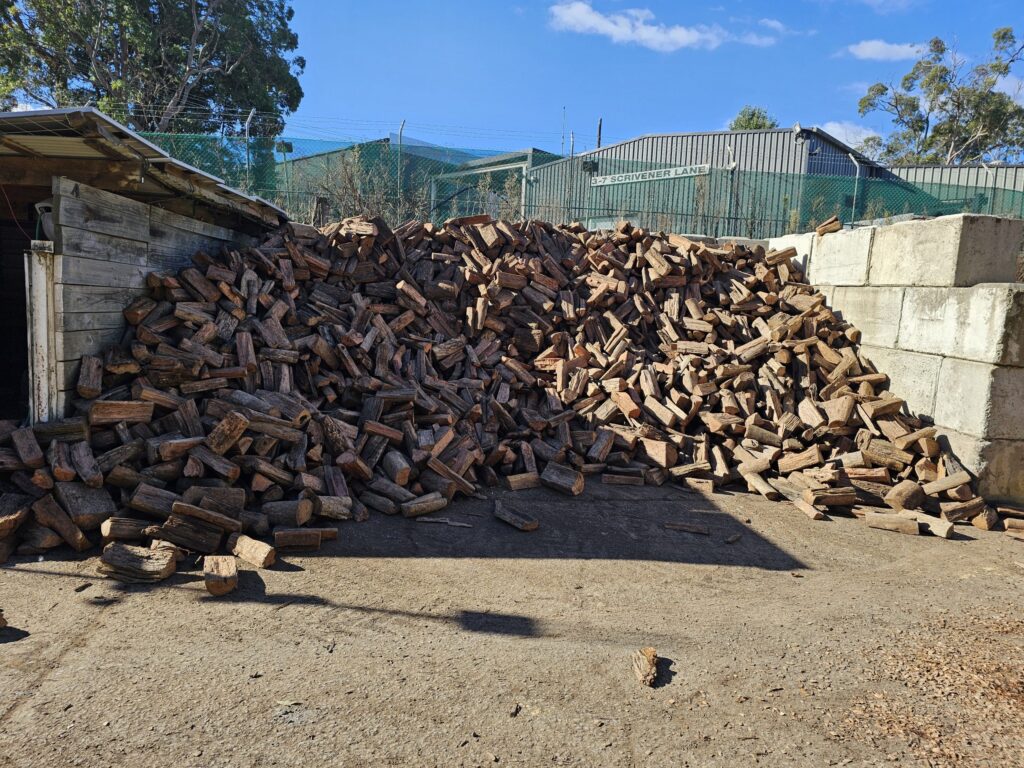
Firewood is the least regulated thing you will buy all winter. There is no mandatory grading, moisture labelling is voluntary, and volume is often described in units that mean nothing. If you have ever bought a load in Sydney that hissed, smoked and gave off almost no heat, you bought wet wood at a dry wood price. Here is how to avoid that.
Seasoning Is Everything
Freshly felled wood can be up to fifty per cent water by weight. Burning it means the fire spends its energy boiling water instead of heating your house, which produces heavy smoke, coats your flue with creosote and delivers maybe half the heat of dry wood.
Properly seasoned firewood sits at or below twenty per cent moisture content. In the Sydney climate, split hardwood needs roughly eight to twelve months stacked under cover with good airflow to get there. Softwoods dry faster, in around six months, but burn faster too.
The NSW EPA guidance on how to check your wood is aged and dry is blunt about it: green or unseasoned wood contains up to fifty per cent water, which causes fires to smoke, and if you are buying wood for immediate use you should ask the seller to verify it has been aged.
Five Field Tests Before You Pay
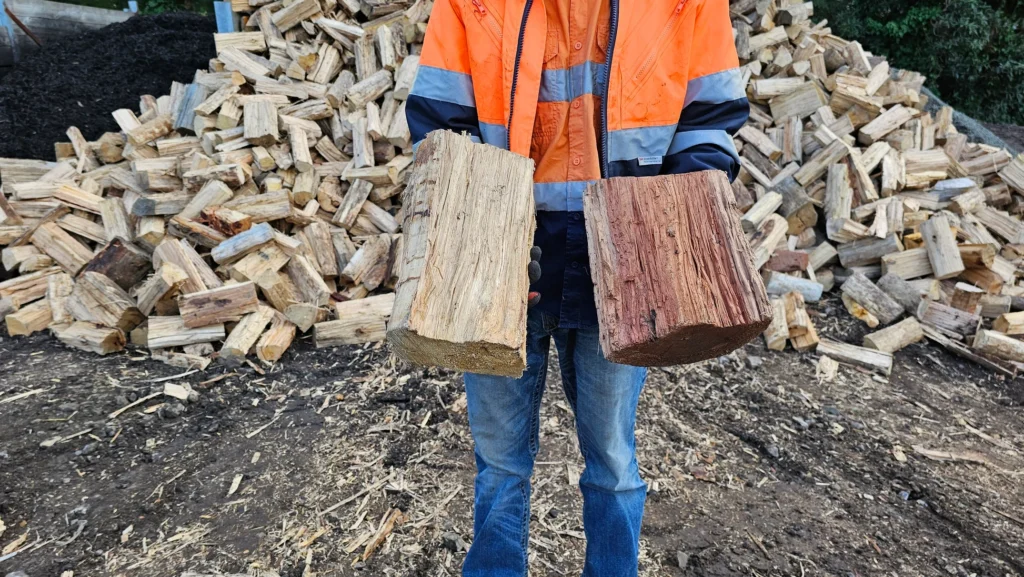
- The clack test. Bang two pieces together. Dry wood gives a sharp, resonant crack. Wet wood gives a dull thud.
- End checks. Dry rounds show radial cracks in the end grain.
- Bark. On seasoned wood, bark is loose and often falling off.
- Weight. Pick up two similar pieces. Seasoned hardwood is noticeably lighter than green.
- Moisture meter. A $30 pin meter used on a freshly split face settles the argument. Under twenty per cent is good.
Best Species for a Sydney Fire
Redgum is the benchmark: dense, long burning, high heat, holds a bed of coals overnight. Ironbark is comparable and often cheaper. Box species, both yellow and grey, are excellent. Blackbutt and spotted gum burn well and are widely available around Sydney as a by-product of tree work.
Avoid or use sparingly: pine and other softwoods, which burn fast and deposit more creosote, so they are best used as kindling; camphor laurel, which is acrid; and anything treated, painted, laminated or salvaged from a building site, which releases genuinely toxic compounds.
Understanding the Volume You Are Buying
This is where most people get stung. Sellers quote in tonnes, cubic metres, barrows, utes and bags, and those are not interchangeable.
Indicative Sydney pricing:
- Small bag, roughly 15 to 20kg: $12 to $25
- Bulk bag, around 0.7 to 1 cubic metre: $120 to $220
- Cubic metre loose, delivered: $150 to $280
- Tonne of mixed hardwood, delivered: $280 to $450
- Tonne of premium redgum, delivered: $380 to $600
- Kindling bag: $10 to $20
Buy by tonne or cubic metre and ask whether the price includes delivery and stacking, because delivery inside the Sydney basin commonly adds $50 to $120.
Buy in Summer, Burn in Winter
The single best move a wood burner can make is buying in January or February. Prices are lower, supply is better, and crucially you get the wood into your own stack with six months of hot dry weather to finish seasoning it. Buying in June puts you at the mercy of whatever is left, at peak prices, often only half seasoned.
How to Store It
Get it off the ground on pallets or a timber frame, cover the top only, leave the sides open for airflow, stack it in single rows rather than a solid block, and orient the rows to catch prevailing wind and afternoon sun. Keep the pile away from the house wall to avoid inviting termites and spiders indoors, and only bring a few days worth inside at a time.
Burning Clean and Staying Legal
Wood heaters are regulated in NSW for good reason. The EPA notes that smoke from wood heaters is a major cause of air pollution and that a smoking fire is wasting your money. Under the wood smoke regulation, all new solid fuel home heaters sold in NSW must achieve at least sixty per cent efficiency and emit no more than 1.5 grams of particles per kilogram of fuel burnt, in line with Australian and New Zealand Standards 4012 and 4013.
Operating essentials: start with kindling and small pieces, stack loosely so air circulates, keep the flame lively and bright, open the air intake for five minutes before and twenty minutes after adding fuel, never let the fire smoulder overnight, burn hot for one to two hours daily to limit creosote build-up, and get the flue swept annually. Local councils can and do act on excessive smoke complaints.
Sourcing Ethically
Be careful where your wood comes from. Firewood harvesting has damaged some genuinely threatened vegetation communities and destroyed hollow-bearing trees that native animals depend on. Buying from tree service companies is often the best option, because that timber is a by-product of work that was happening anyway rather than trees felled for fuel. Ask your supplier where it came from. A good one will tell you.
Bottom Line
Buy hardwood by the tonne, buy it in summer, test it before you pay, stack it off the ground with the sides open, and burn it hot. Wet wood is not a bargain, it is a con with a delivery fee.